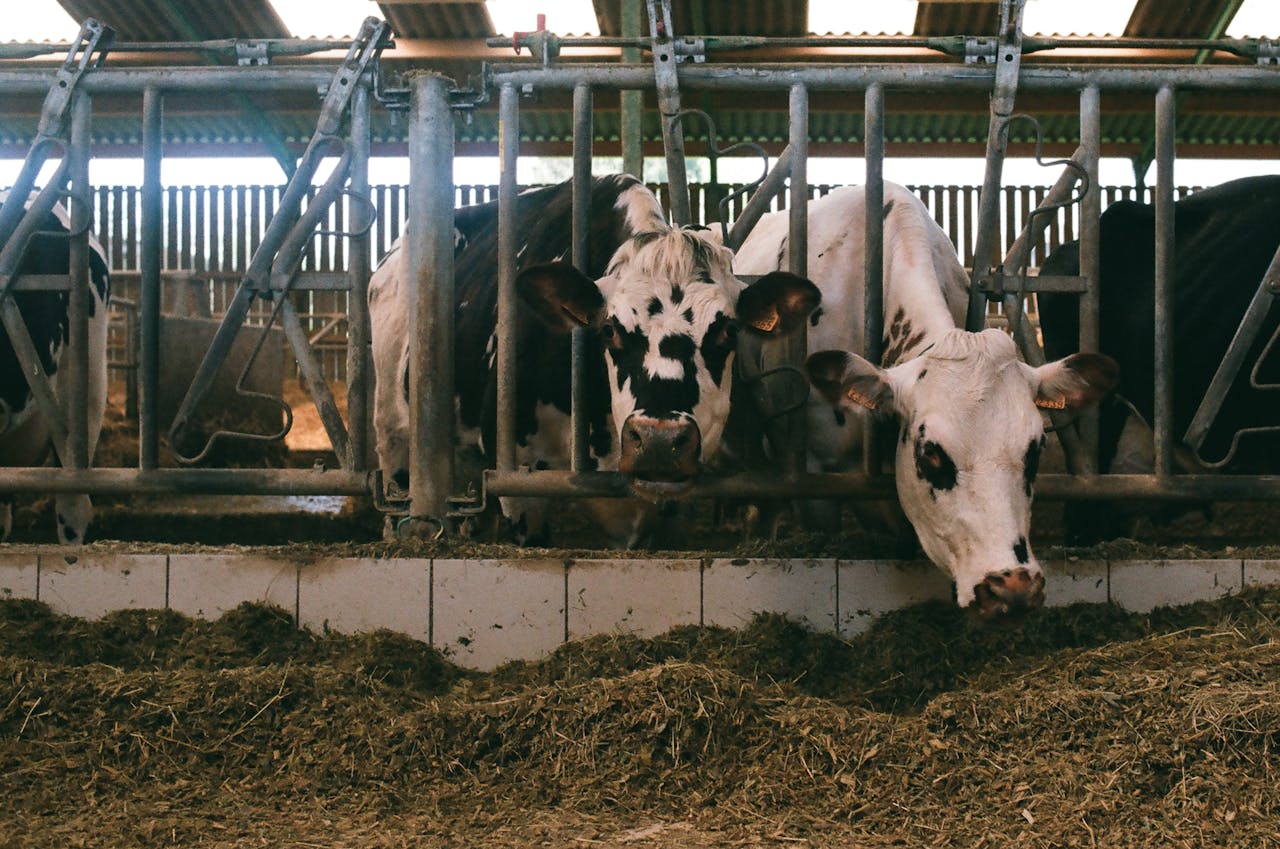
Could a simple forage swap make dairy farming more sustainable? A recent study found that feeding chicory to dairy cows can significantly reduce methane emissions without reducing milk yield. Researchers explored whether this eco-friendly feed option can help balance productivity and environmental impact on today’s farms.
In a new study, the effects of chicory (Cichorium intybus) and perennial ryegrass (Lolium perenne) diets on methane (CH₄) emissions, feed intake, feeding behaviour, and lactation performance in dairy cows were assessed with 32 Holstein-Friesian cows. In this research, scientists set out to compare the effects of feeding chicory versus ryegrass as the sole roughage source on CH₄ emissions and dairy cow performance, including feed intake, feeding behaviour, milk production, and milk composition.
Feeding regimen and experimental design
The 32 Holstein-Friesian cows, which were assigned to 2 treatments based on parity, DIM, and fat- and protein-corrected milk (FPCM) yield, underwent a 4-week experiment, including a 2-week adaptation period followed by 2 weeks of data collection.
Cows were fed either early vegetative chicory or late vegetative ryegrass as their sole roughage source, harvested daily and freshly provided in individual feed bins with automated intake recording. Concentrate was provided during milking and via the GreenFeed system that measured gaseous emissions.
During a 2-week adaptation period, the diet of cows assigned to the chicory treatment was gradually adjusted by replacing ryegrass with chicory (from 33% to 67% of the roughage). During the measurement period, cows were fed either 100% chicory or 100% ryegrass as the sole roughage source.
Impact on feed intake and feeding behaviour
No major differences were seen for meal criterion, roughage DMI, GF bait DMI, total feed DMI, number of meals, successful visits at FB and GF units (tendency for visits to GF units), total visits, and feed efficiency (per meal or per day, where applicable). What the scientists found is that cows fed chicory spent more time eating roughage per meal and per day, resulting in greater total eating time and meal duration, and lower roughage intake rate than cows fed ryegrass (P ≤ 0.04).
Effects on methane and hydrogen emissions
According to the team, milk fat content decreased by 11% and milk urea content by 52% upon feeding chicory, while FPCM as well as fat, protein, and lactose yields remained unaffected. Methane production (g/d), yield (g/kg DMI) and intensity (g/kg FPCM) were reduced by 26%, 24%, and 25%, respectively. No dietary effect was observed on GreenFeed visit frequency or on CH₄ estimates. Hydrogen production, yield, and intensity were 63%, 68% and 67% higher, respectively, in cows fed chicory.
Lactation Performance and Milk Quality
The low Neutral Detergent Fibre (NDF) content and intake of chicory, along with a potentially shorter rumen retention time, may have lowered the intake of physically effective NDF. This, in turn, could have lowered ruminal pH and altered ruminal fatty acid biohydrogenation, thereby promoting the formation of specific intermediates such as trans-10 fatty acids.
Nutritional factors and ruminal implications
The lower milk urea content observed with chicory compared with ryegrass (15 and 31 mg/dL, respectively) reflects its lower crude protein content. Elevated plasma urea concentrations may result from excess ruminal ammonia production via microbial deamination of dietary nitrogen sources, or from post-absorptive deamination of amino acids when supply exceeds anabolic demand. In line with previous studies, the researchers found that chicory contained higher concentrations of dietary minerals, including Na and K, compared with ryegrass.
Opportunities and challenges in chicory use
In terms of climate challenges, chicory offers advantages for dairy production, including drought resilience due to its deep taproot system and reduced CH₄ emissions, as demonstrated in the current study. However, the researchers state that realising these benefits in practice requires careful attention to grazing management, as chicory presents notable challenges related to relatively poor persistence and sensitivity to grazing management. In particular, overgrazing or grazing under wet conditions can damage the crown and taproot, compromising persistency and productivity. Additionally, chicory’s low DM content and tendency to bolt in summer can limit forage quality. Under grazing, cows may selectively graze leaves and avoid stems, or intake may be more variable due to sward structure and regrowth stage, potentially modifying the methane mitigation response observed under zero-grazing conditions in the present experiment.
Conclusions: Chicory’s potential in dairy cow diets
The researchers conclude that compared with ryegrass, feeding chicory reduced enteric CH₄ emissions and increased H₂ emissions, suggesting a shift in rumen fermentation pathways and/or inhibition of rumen methanogens by secondary metabolites. Chicory maintained comparable DMI but increased eating time and meal duration, while reducing roughage DM intake rate. Feeding chicory decreased milk urea and fat concentrations without affecting total milk fat and FPCM yield. Overall, these findings indicate that chicory may lower the environmental impact of dairy production systems while maintaining milk component yields; however, the observed responses should be interpreted in the context of the forage stages, with chicory at an early vegetative stage and ryegrass at a late vegetative stage. The scientists also highlighted that although chicory may serve as a promising forage option to mitigate methane emissions in dairy production systems, the 24 to 26% reduction observed should be interpreted with caution and require confirmation across diverse conditions before broader generalisation.