Soybean meal remains the cornerstone of poultry feed in the European Union due to its high protein content, digestibility, and competitive price. However, limited domestic production forces the EU to import the majority of its supply from overseas, raising concerns about sustainability and supply chain security. As pressures mount to find alternatives, both practical and political barriers slow the pace of change.
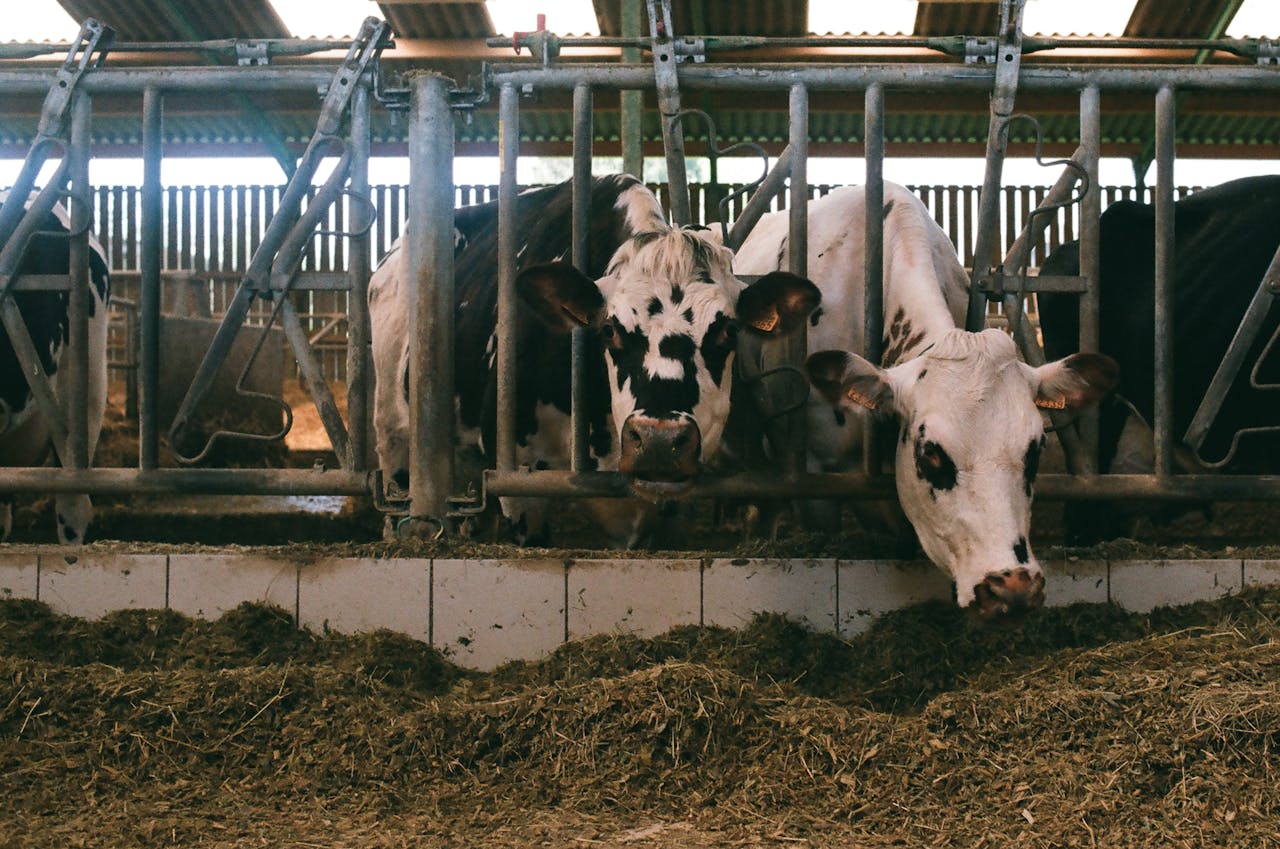
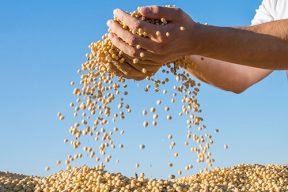
Soybean meal is a crucial component in carefully formulated poultry feeds. Its high crude protein content, good digestibility, wide availability and competitive price make soy a widely used premium ingredient in poultry rations. However, the availability of soy within the European Union itself is limited. The EU has a low self-sufficiency rate in protein-rich feed materials and currently relies on imports to meet around two-thirds of its requirements.
Replacing soy in EU poultry diets is not impossible, but right now, nothing matches its availability, price and nutritional value—every serious alternative comes with trade-offs.
Globally, annual soybean production exceeds 300 million tonnes. The vast majority of this production (around 80%) takes place in Argentina, Brazil and the United States. The EU accounts for less than 1% of global soybean production. Approximately half of global output — around 150 million tonnes — is traded internationally, with roughly 10% of these exports shipped to the EU from Brazil and the United States.
Concerns about rainforest deforestation in Latin America linked to soybean cultivation are expected to be addressed within the EU through the planned implementation of the European Deforestation Regulation. Nevertheless, the EU remains committed to reducing its reliance on soy imports and is actively exploring alternatives. Increasing self-sufficiency in high-quality feed materials is seen as a way to enhance food security, while also contributing to biodiversity, nature restoration and lower emissions.
Why soy still dominates
Last summer, soybean meal prices fell to their lowest level in a decade. “The market is doing its job. Soy prices are historically low at the moment, which makes it much less attractive to look at alternatives,” says Jeroen Doornhof, sales manager for laying hen production at ABZ Diervoeding in the Netherlands. According to Doornhof, nutritionists currently see no reason to reduce soy inclusion rates. On the contrary, soy scores very well in price-optimisation programmes. “Right now, there is maximum focus on soy.”
However, soy prices are volatile and influenced by a range of factors. Geopolitical trade tensions and import tariffs can negatively affect prices, as can extreme weather events such as prolonged droughts or flooding. Given these uncertainties, it is worthwhile to examine potential alternatives that could help reduce dependence on soy imports.
Reducing dependence
Volkert Beekman, together with Marjolein Selten and Ralph Pessers of Wageningen Social & Economic Research, investigated possible alternatives to soy imports from outside the EU. “If you look at the current scale of soy imports, it is very difficult to reduce dependence in the short term. That is simply not realistic,” Beekman explains. “The feasibility of reducing soy imports strongly depends on the time horizon considered.”
Due to differences in protein content and amino acid profiles, replacing a high-value ingredient such as soy in broiler diets is far from straightforward. Oilseeds are often mentioned as the most obvious alternative to soybean meal. However, according to Beekman, replacing current soy volumes with oilseeds is not easy, particularly within the EU. “Ukraine is a major producer of sunflower meal in Europe, but as everyone knows, that is not exactly a stable environment at present.”
Replacing soy with by-products from the human food industry also presents challenges. “It’s difficult to replace soybean meal on a one-to-one basis with ingredients other than oilseeds,” Beekman notes. The Dutch Feed Industry Association (Nevedi) aims to maintain the share of co-products and by-products at the 2018 level. Strong competition from energy production makes this objective challenging in its own right.
Nevedi is committed to a more sustainable food system and has set itself the goal of maintaining the share of European feed raw materials for poultry at the 2018 level, when 75% of ingredients were sourced within Europe. “Maintaining this level is challenging, given market conditions and raw material availability, while at the same time safeguarding nutritional values to ensure animal health and welfare,” says Arjen van Nuland, poultry portfolio holder on Nevedi’s board.
Processed animal protein as a potential alternative
For several years now, the use of processed animal protein (PAPs) in poultry and pig feed has again been permitted under strict conditions. According to Van Nuland, PAPs represent a realistic alternative to soy in poultry feed. “Alternatives to soy — particularly PAPs, rapeseed meal, sunflower meal, pulses and emerging sources such as insect and algae protein — are partly available within the EU, but they vary widely in scale and cost.”
The market is clearly evolving. Nevedi indicates that it will continue to actively explore alternatives, although these are currently less competitive. The association sees increasing use of PAPs as a replacement for soy, while recognising that practical applicability and availability remain limiting factors.
Feed trials with mixed results
ABZ Diervoeding has conducted feed trials using alternative ingredients, according to sales manager Jeroen Doornhof, with mixed outcomes. “Of course, there are alternatives, but the question is whether the birds actually benefit from them.” Availability remains a major concern. “Limited availability of alternative raw materials also affects price formation.”
Doornhof does not currently see how the sector could function without soy. He points to a combination of factors, including the price of alternatives, their nutritional value and their impact on feed structure. “Without soy, you quickly end up in a corner you don’t want to be in.”
Political uncertainty
Forecasting developments remains difficult, particularly in a political context. “Within the EU, there is a more right-leaning political climate, with limited incentive to reduce soy imports,” says Beekman. Potential trade tariffs could also affect the soybean meal market. “Trump is unpredictable and could introduce import tariffs that drive up soybean meal prices.”
Beekman notes that Nevedi is actively promoting the import of sustainable soy. “Imports of certified, deforestation-free soy have increased significantly. Major steps are being taken in this area. While this does not change the EU’s dependence on soy, it does have a clear positive impact on rainforests in Latin America. In that respect, Nevedi is clearly moving in the right direction.”
Unpopular measures
The report on alternatives to soy imports from outside the EU also outlines options that are unlikely to be warmly welcomed by the agricultural sector. These include replacing animal products with plant-based consumer alternatives and restructuring the livestock population. According to the authors, consumption of plant-based alternatives could be encouraged through more favourable VAT rates. One of the report’s conclusions is that without reducing the current size and composition of the livestock sector, it will be difficult to significantly reduce dependence on soy imports from outside the EU.