Maximising home-grown forage has been key to the success of a mixed dairy and arable enterprise, which has been shortlisted for the 2025 National Milk Records/Royal Association of British Dairy Farmers Gold Cup award.
The Royal Association of British Dairy Farmers Gold Cup is a prestigious competition in the UK dairy industry recognising excellence in dairy farming. The award, sponsored by RABDF and National Milk Records, is open to all dairy businesses including those recording their cows. The competition evaluates dairy farms based on their overall performance. The award is valued at £100,000, although its true worth lies in the prestige it confers to the winner rather than its monetary value.
Meet the Madders family
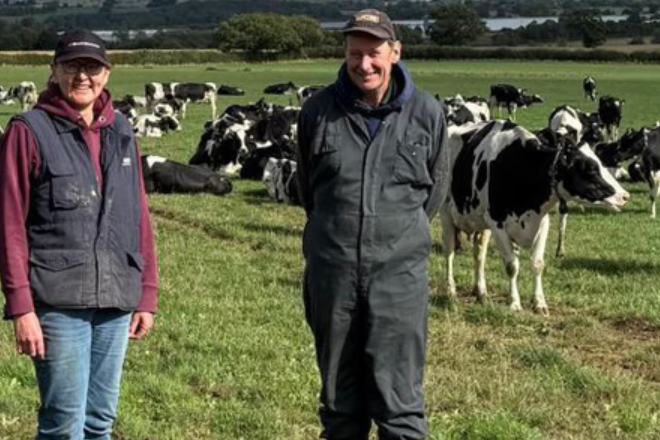
The Madders family, one of the 5 finalist, now in its fifth generation at Church Farm, Coppenhall, Staffordshire through brother and sister team of Mike Madders and Rosie Chandler operates a 422-hectare mixed dairy and arable enterprise, primarily family-owned with some rented land.
Dairy and arable operations
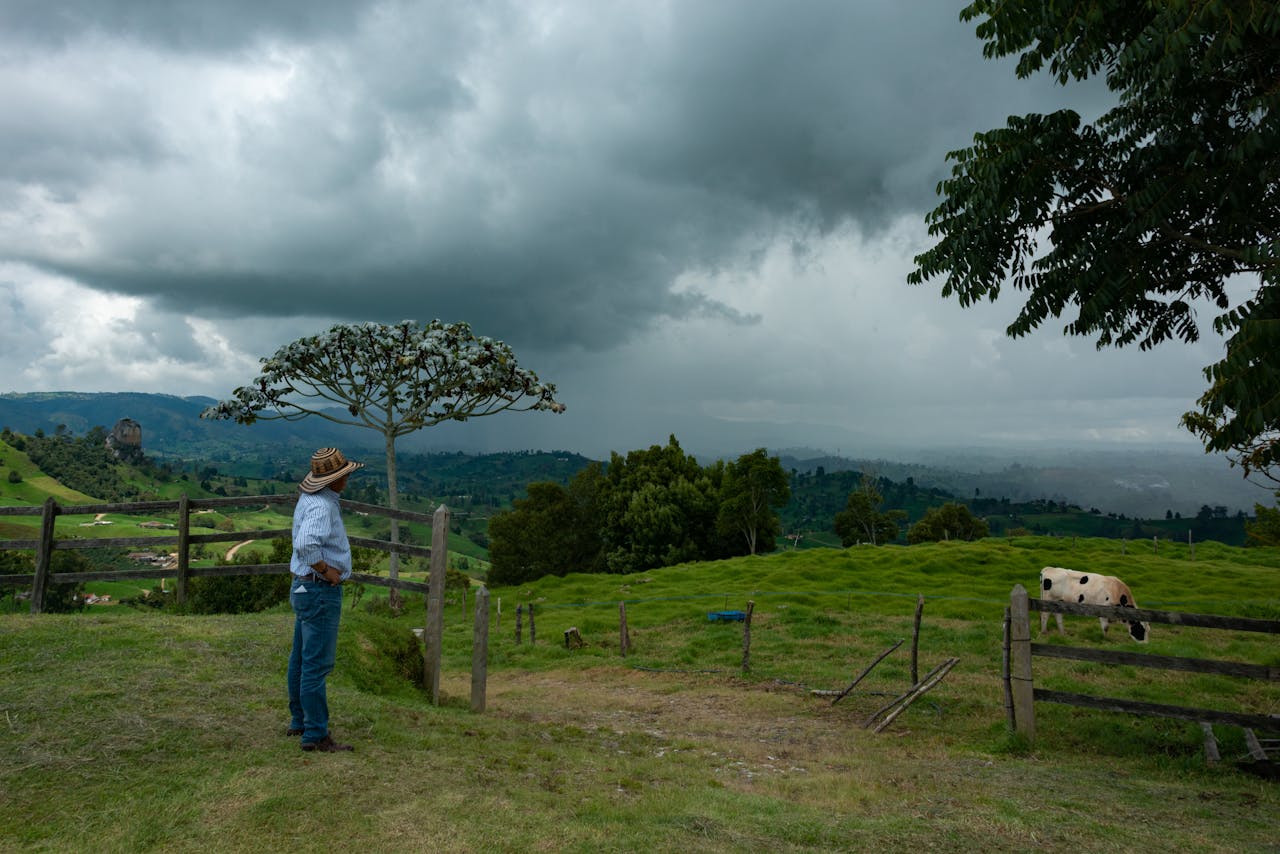
The 202-hectare dairy platform supports 340 Holstein cows and 220 youngstock. Grazing is a priority, with cows out for 6 months annually (mid-April to mid-October), weather permitting. The main milking group grazes by day and receives a partial mixed ration overnight, while a low-yielding group of 40 cows grazes full-time. Paddocks near the dairy buildings are supplemented after silage cuts to extend grazing.
Bedding and housing innovations
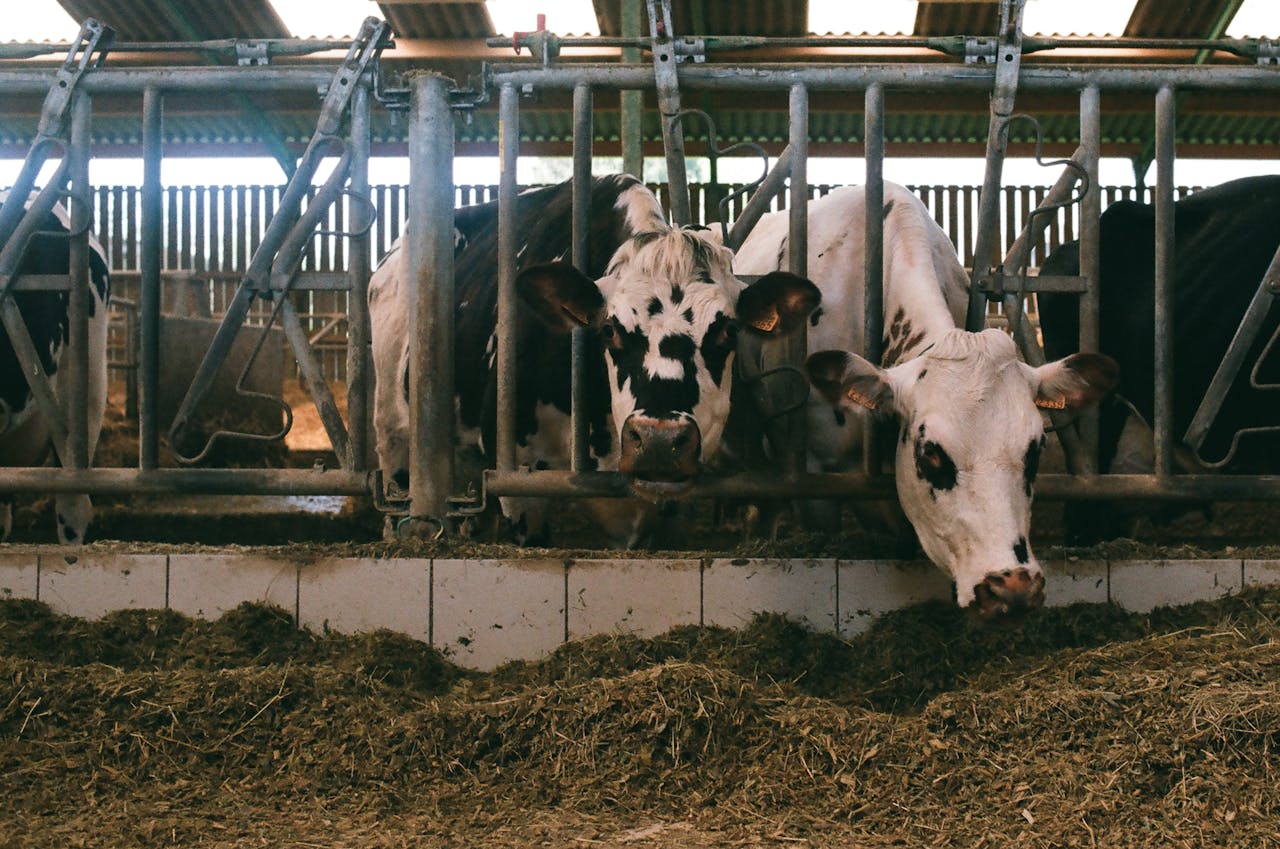
All milking cows are housed in cubicles across 2 sheds, bedded with mattresses and Envirobed paper crumb, with a waterbed trial underway to enhance comfort. Youngstock and dry cows use straw bedding from the arable operation, and slurry/manure is recycled to enrich arable soils. Cropping includes forage maize and long-term cutting leys to reduce weed pressure.
Silage and feed strategy
The ration consists of two-thirds grass silage and one-third maize silage, plus a bespoke protein blend and minerals. Following the dry summer of 2025, straw was added to stretch forage supplies. Nutrition is managed using regular silage analysis. Cows are fed to yield in the parlour, averaging 4.5 kg of a high-starch, 16% protein nut, with up to 6 kg for high producers. Milking occurs twice daily in a 20/40 herringbone parlour with sequential ID and automated feeders.
Breeding and genomics focus
The closed Holstein herd achieved pedigree status in the 1970s under the Copehale prefix. Breeding focuses on PLI, milk constituents, and functional traits. Genomic testing of heifer calves began in 2023, with the top 30% retained for replacements using sexed semen; others are bred to Aberdeen Angus for beef supply chains. The goal is to rear 100 Holstein heifers annually.
Herd health and biosecurity
Herd health is maintained through strict protocols and monthly mobility scoring, with 90% of cows at optimal scores. The herd remains naïve to BVD and IBR, monitored via milk screening and calf tagging. Vaccinations cover BVD, Leptospirosis, Blackleg, Huskvac, and Bluetongue. Johne’s prevalence has fallen to 12 cows out of 341, supported by NMR HerdWise screening.
Management antibiotic use
A proactive health plan from Manor Farm Vets has reduced antibiotic use, with only 31% of cows treated at drying off.
Recent investments and upgrades
Significant investment includes a maize clamp (2019), cubicle and parlour extensions (2020), a calf shed (2021), and loose housing for in-calf heifers (2023). Current projects include expanding silage capacity, reducing waste, and constructing a slurry lagoon in spring 2026. Plans also include adding a 40 kW solar PV array to the existing 50 kW system.
Sustainability and future goals
Mike and Rosie aim to build a resilient, well-invested business for future generations, whether family or external successors.