The 2025 harvest season has brought fresh challenges and notable findings for feed safety across Europe, the USA and Canada. After analysing over 2,000 new-crop samples, Alltech is proud to present insights from its annual Harvest Analysis, a trusted resource for understanding mycotoxin trends and their impact on animal health and nutrition.
In mid-January, Alltech hosted its global Alltech Harvest Broadcast ‘From Field to Feed: 2025 Crop and Mycotoxin Analysis’, from its headquarters in Kentucky. Experts unpacked harvest outcomes, weather impacts, market outlooks and practical strategies to help producers navigate mycotoxin risks across the feed supply chain. The broadcast also explored how AI is advancing mycotoxin prediction models.
Regional weather variability
Dr Jan Dutton, CEO of Prescient Weather Ltd., emphasised how weather variability directly affects grain yields, noting that predictive tools such as CropProphet can help manage production and market risks.
“Weather and climate are among the biggest drivers of both crop performance and mycotoxin risk, and those impacts vary dramatically by region and year,” Dr Dutton said.
Regional weather patterns in 2025 showed:
- United States: Significant heat occurred in early and late July, with mild weather during corn silking.
- Canada: Oat-growing regions experienced substantial dryness from May through June.
- Europe: Above-normal temperatures marked the early corn-growing season, with dry conditions in June followed by a modest recovery in July.
Dr Max Hawkins, global technical support at Alltech, observed that 2025 weather and crop stress varied more by region than in 2024. Difficult growing conditions in the USA, including Southern maize rust, tar spot, wind damage and excess rainfall, affected plant health and mycotoxin levels, posing potential risks to sensitive species such as ruminants.
“This year, we saw mycotoxin risk shift west in the USA, while the risk in the east declined — a clear reminder that risk patterns change year on year depending on weather and crop stress,” he said. This highlights the importance of thoroughly testing 2025 feedstuffs to ensure safe, effective finished feeds and TMRs.
2025 harvest highlights
The 2025 Harvest Analysis findings reinforced that growing conditions and mycotoxin risk vary across regions and crops. Dr Hawkins stated, “Crop quality is at its peak at harvest time and can quickly deteriorate during storage and shipping, which requires thorough post-harvest management to prevent potential quality issues from escalating.”
Multi-mycotoxin exposure remains one of the most significant challenges for feed and animal health. While individual mycotoxin levels may appear moderate when assessed in isolation, the combined presence of multiple toxins can have additive or synergistic effects, increasing the risk of reduced feed intake, impaired immunity and compromised performance.
The majority of samples tested in the Alltech 2025 Harvest Analysis contained multiple mycotoxins, highlighting the need for risk assessment approaches that account for total toxin load rather than single-toxin thresholds alone. This is particularly relevant for high-producing animals, where even subclinical challenges can translate into measurable performance and economic losses.
Mycotoxin contamination patterns
Europe
- In maize, warmer weather in Southern Europe has once again contributed to high aflatoxin levels.
- Barley demonstrated a risk level much higher than that of wheat, with an average of 6.7 mycotoxins per sample.
- The predominant challenge in forages in Northwestern Europe is Penicillium mycotoxins, while in maize silage, Fusarium toxins such as type B trichothecenes dominate.
United States
- US maize crops faced challenges from tar spot and wind damage in the 2025 growing season, resulting in elevated mycotoxin levels across all corn products.
- Maize silage averaged 5.5 mycotoxins per sample, mainly with Fusarium mycotoxins, and risk levels increased over the harvest period.
- Maize grain had 6.5 mycotoxins per sample, following rainfall and disease-pressure patterns, with the risk escalating as the harvest progressed.
Canada
- In 2025, Canadian grain samples (barley, maize, and wheat) showed moderate mycotoxin risk, with DON detected in 40% of samples at an average of 1,891 ppb and a worrying maximum of 679,211 ppb.
- Canadian forages presented higher risk profiles, with DON occurring in 69% of samples, T2-HT2 in 54% and zearalenone in 79%.
- The broader geographic spread of contamination in forages compared to grains indicates the need for careful storage monitoring throughout the season.
AI and pre-harvest mycotoxin prediction
‘AI technologies are playing an increasingly important role in mycotoxin management’. Dr Alexandros Yiannikouris’ research group director at Alltech, highlighted collaborative efforts led by Wageningen University and an industry consortium to develop advanced European grain models.
“Decades of research into effective mitigation tools are now being enhanced through AI-driven predictive modeling, integrating more than 200 factors that influence mycotoxin risk, allowing us to identify elevated risk even when visual crop quality or historical averages suggest conditions are safe,” Dr Yiannikouris said.
These insights are informing targeted nutritional solutions such as the Mycosorb Evo range, designed to mitigate global mycotoxin challenges, including DON and fusaric acid (FA).
‘What is in store this year?’
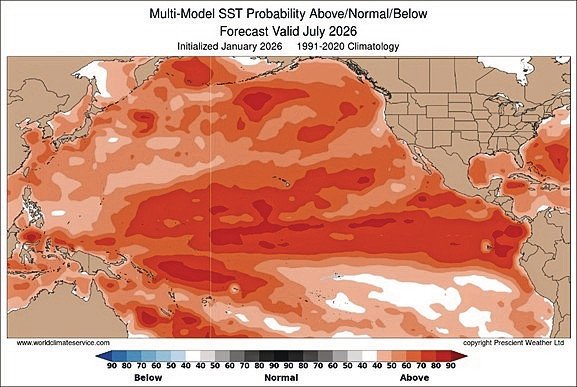
While the Alltech 2025 Harvest Analysis focused on the USA, Canada and Europe, it also provided an early overview of the upcoming harvest in Brazil and Argentina. Weather variability in these regions could affect both yield and quality, making monitoring critical for accurate forecasts and risk assessment. Dr Dutton shared insights on what US producers can expect in the coming year, including the development of El Niño in the Northern Hemisphere by Summer 2026.
“Historically, El Niño summers bring wetter-than-normal conditions across major US growing regions, which increases the likelihood of mycotoxin development,” he said.
In conclusion, the Alltech 2025 Harvest Analysis confirms that mycotoxin risk remains highly variable, region-specific, and is increasingly driven by weather and crop stress. Multi-mycotoxin contamination was evident across grains and forages in Europe, the USA and Canada.
As producers look toward 2026 amid climatic uncertainty, these findings underscore the need for proactive risk management. The best mycotoxin management programs are built on regular testing, detailed risk assessment and the use of the most appropriate mycotoxin control strategies both pre- and post-harvest. By applying lessons from 2025, producers can build resilient feed programmes that safeguard animal health, maintain performance and protect profitability.
Click here to receive the Alltech 2025 Harvest Analysis Report for your region.