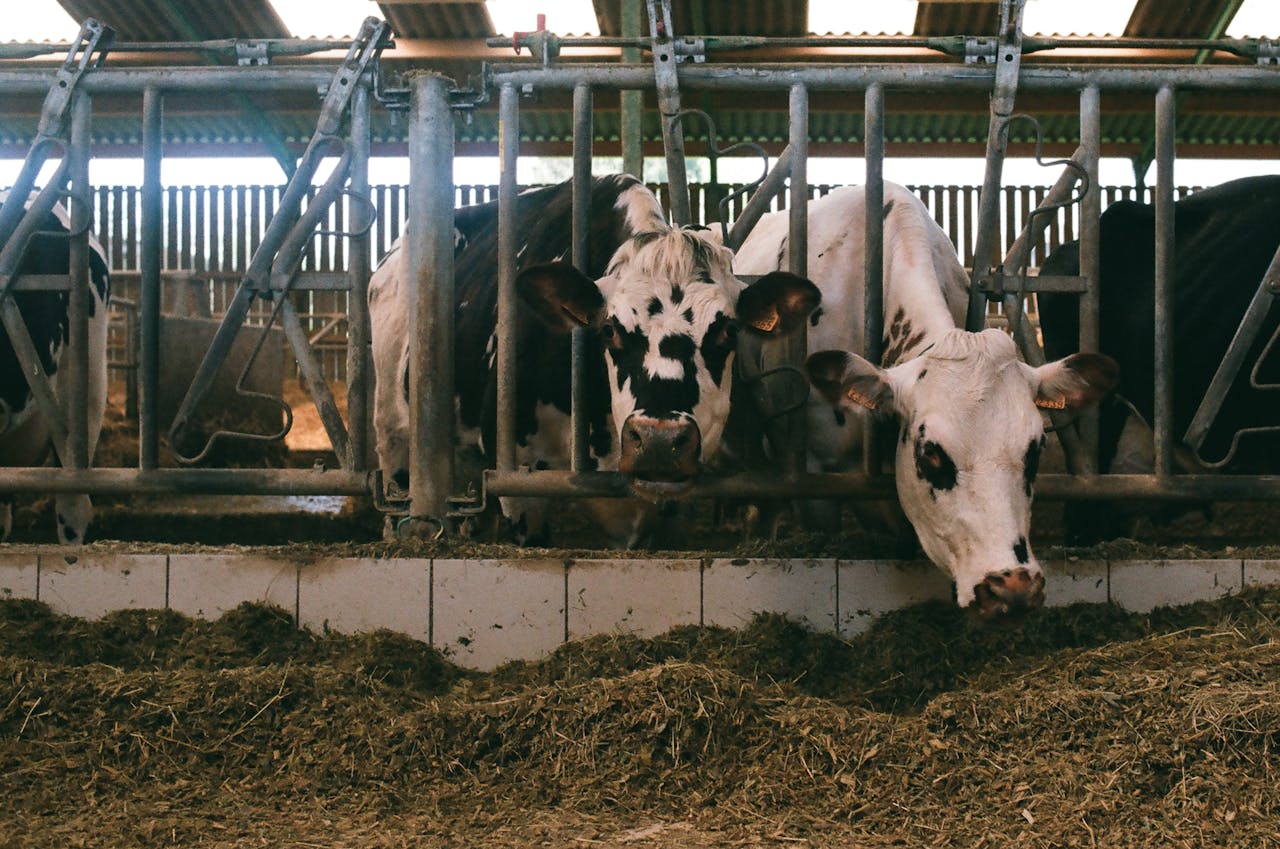
For many feed producers and purchasing teams, mycotoxin risk is considered “under control” once regulatory limits are met. Yet in practice, unexplained variability in feed efficiency, health stability and reproductive performance persists, even when classical mycotoxin panels show low contamination. This disconnect reflects a growing challenge in modern feed production: subclinical, multi-mycotoxin exposure remains largely invisible to routine controls.
Among the most consistent sources of mycotoxins are Fusarium metabolites, most notably deoxynivalenol (DON), fumonisins (FUM), and zearalenone (ZEN), along with emerging contaminants nivalenol (NIV), enniatins (ENN), and beauvericin (BEA). In monogastric species, the impacts on intestinal integrity, immunity, and feed efficiency are widely documented. In ruminants, the long-held notion of “rumen protection” has been challenged by evidence that demonstrates reproductive, immunological, and hepatic effects, particularly under chronic exposure and co-contamination.
Poultry: the subclinical burden that drains performance
In broiler chickens, combinations of DON + FUM + ZEN, even below regulatory thresholds, can reduce weight gain, shorten villi, disrupt tight junction proteins (occludin/claudin-4), and impair immune modulation – conditions that predispose birds to enteric disorders such as necrotic enteritis when Clostridium perfringens and/or Eimeria are present.
Recent findings indicate that NIV induces marked enteric cytotoxicity and epithelial inflammation, whereas ENN and BEA – due to their ionophoric activity – destabilise cell membranes and modulate the microbiome, effects that intensify barrier dysfunction when co-occurring with DON/FUM.
Contemporary reviews reinforce that co-occurrence is the norm rather than the exception and that the emerging of distinct toxic mechanisms (e.g., the inhibition of protein synthesis by DON and the disruption of the sphingolipid metabolism by FUM) increases cytotoxicity and immunosuppression, leading to performance losses even in the absence of overt clinical signs.
In practice, these subclinical effects translate into poorer flock uniformity, reduced predictability of feed conversion, and greater vulnerability of antibiotic-free production systems – outcomes that directly impact margins and planning reliability.
Swine: rapid intestinal impact and immune disruption
Pigs often exhibit acute responses to DON (hyporexia, gastrointestinal discomfort), but the greatest practical concern is the sustained decline in efficiency driven by intestinal damage and persistent inflammation, which can last for weeks after contaminated feed is withdrawn. Additionally, evidence shows shortened villi, altered enzymatic secretions, and increased susceptibility to enteric pathogens (E. coli, Salmonella), all exacerbated by co-exposure to FUM and ZEN.
Beyond the well-established sensitivity of pigs to DON, NIV heightens epithelial inflammation, while ENN and BEA exert direct cytotoxicity that compromises membrane integrity and promotes microbial imbalance in the large intestine. When combined with DON or FUM, these emerging toxins can accelerate the onset of subclinical manifestations (intermittent diarrhoea, erratic performance), even when classical panels indicate moderate risk.
A critical point in swine production is the role of modified (masked) forms such as DON-3-glucoside. Its rapid hydrolysis in the intestine, releasing bioactive DON, maintains a high toxicological risk even when initial analyses underestimate exposure.
From a management perspective, the key risk is not only exposure, but the duration of impact: intestinal damage and inflammation can persist well beyond the contaminated batch of feed, undermining recovery strategies and obscuring root cause analysis.
Ruminants: partial rumen degradation does not equal immunity
In ruminants, a portion of trichothecenes is degraded in the rumen, but this does not grant full protection. While ruminal degradation provides a degree of buffering, it should be viewed as risk reduction rather than immunity, particularly in high corn, high silage systems.
Chronic exposure to DON, ZEN and FUM has been associated with reproductive alterations (ZEN), intestinal inflammation, immunological disturbances, and hepatotoxicity. FUM are poorly degraded in the rumen, which is an especially relevant concern in diets rich in corn silage, where it can induce intestinal and hepatic cytotoxicity at levels commonly observed in field conditions.
Regarding emerging toxins, NIV, ENN, and BEA can act synergistically with DON/FUM, particularly in silage-based systems. This contributes to fermentative disruptions, reduced microbial efficiency, and indirect effects on immunity and reproduction. Even short exposures to ZEN or FUM have been shown to elicit measurable systemic changes, such as elevated hepatic enzymes or temperature shifts, underscoring how brief exposure windows can still translate into meaningful biological outcomes.
Interactions: 1 + 1 > 2
Fusarium mycotoxins rarely occur in isolation. The literature consistently shows that combinations of DON, FUM, and ZEN, together with NIV, ENN, and BEA, amplify toxic effects through complementary pathways, leading to pronounced intestinal damage, microbiota dysbiosis, immunosuppression, and performance loss. In poultry, DON + FUM reduces villus height, disrupts tight junctions, and increases susceptibility to enteritis. Emergent toxins such as NIV/ENN intensify inflammation and epithelial damage, even within subclinical ranges.
In pigs, DON undermines villus structure and digestive capacity, FUM increases intestinal permeability, and NIV/ENN/BEA exacerbate inflammation and cytotoxic stress. DON-3-glucoside further contributes to analytical underestimation of true exposure.
In ruminants, FUM bypass ruminal degradation, and when co-exposed with DON/NIV/ENN/BEA, can alter fermentation and systemic inflammation, particularly in corn-silage-based diets. Short exposures to ZEN or FUM can cause measurable physiological alterations, including increased hepatic enzymes, cardiovascular effects, and mild hyperthermia.
For feed decision-makers, the implication is clear: risk cannot be evaluated molecule by molecule. Co-occurrence fundamentally changes the biological impact and explains why performance losses often appear disproportionate to analytical results.
Testing for emerging mycotoxins should be considered whenever subclinical signs arise (e.g., poor feed efficiency, immune instability) despite low classical panel results, as well as in cases of known co-exposure to DON/FUM/ZEN or unexplained variability in flock or herd performance.
The pillars of integrated mycotoxin risk management
Subclinical mycotoxin exposure cannot be effectively managed through single interventions or isolated measurements. Because performance losses arise from co-occurrence, chronic exposure, and biological interaction, control is only restored when mycotoxin risk is addressed as a system. An integrated approach combines early detection, prevention at the ingredient level, nutritional resilience, and validated mitigation technologies, supported by structured decision-making.
Smart sampling, diagnostics, and risk interpretation: Effective management starts with knowing where true risk lies. Trouw Nutrition supports early and accurate risk identification through an integrated diagnostic ecosystem that combines representative sampling, LC-MS/MS analytics, and global contamination intelligence. By translating analytical data into species-specific biological risk, technical teams are better equipped to prioritise interventions and avoid false reassurance based on regulatory compliance alone.
 Ingredient hygiene, storage ecology, and feed safety: Maintaining ingredient integrity is central to reducing fungal and microbial risk. Trouw Nutrition applies feed safety principles that focus on ingredient preservation, moisture control, and shelf-life extension throughout storage and processing. Furthermore, dedicated precision dosing equipment allows for uniform application of potent blends of organic acids and their salts, alongside proven feed safety technologies. These measures aim to stabilise ingredient quality and reduce fungal pressure before contamination escalates into a nutritional and biological challenge at the animal level.
 Nutrition for intestinal resilience and health support: Trouw Nutrition’s nutritional strategies are designed to support intestinal integrity, immune competence, and microbial balance under subclinical stress conditions. By adjusting formulation parameters and applying functional nutrition concepts, animals are better able to cope with low-level, chronic mycotoxin exposure – an increasingly important consideration in antibiotic-free and high health production systems. By integrating feed, farm, and health management, this pillar supports intestinal integrity, digestive function, and overall robustness across species facing DON, FUM, and ZEN challenges.
 Proven multi-mechanism mitigation solutions: When exposure cannot be sufficiently reduced, mitigation technologies must address the complexity of multi-mycotoxin challenges. Single mode binders are often insufficient against combinations of trichothecenes, fumonisins, zearalenone, and emerging toxins. Trouw Nutrition offers multi-mechanism solutions that are validated under practical, in-vivo conditions. These solutions are designed to act across different toxin classes and biological pathways. Powered by the science of Selko, Trouw Nutrition developed the TOXO portfolio, which includes the company’s most advanced solutions for mycotoxin mitigation, integrating multiple, complementary mechanisms. Through its broad-spectrum efficacy and strong scientific substantiation, the TOXO line delivers a reliable, evidence-based solution for supporting animal performance in complex, subclinical mycotoxin contamination scenarios.
 Governance and structured decision-making: Consistency in mycotoxin management depends on clear governance. Trouw Nutrition developed structured intervention guidelines, species-specific sensitivity frameworks, and decision support tools that help technical and purchasing teams respond proportionally to risk. By integrating analytical results, ingredient origin, and environmental risk factors, this governance approach enables timely, proportionate, and cost-effective intervention. This structured approach ensures that mycotoxin management becomes a controlled process rather than an emergency measure.
Conclusion
In a production environment defined by tight margins and increasing variability, managing what cannot be seen has become a strategic necessity.
The challenge posed by Fusarium mycotoxins goes far beyond the simple detection of DON, FUM, and ZEN. Subclinical combined exposure, driven by additive or synergistic interactions between classical molecules, modified forms, and emerging contaminants, is now recognised as a major invisible driver of performance losses in poultry, swine, and ruminants.
Ultimately, the challenge today is no longer just detecting the presence of Fusarium mycotoxins, but developing intelligent, integrated mitigation strategies that effectively reduce their real impact.
By combining advanced diagnostics, co-occurrence insight, and multi-mechanism mitigation, feed producers can regain control over subclinical mycotoxin risk – maintaining performance, improving predictability, and supporting long-term sustainability.