UK dairy farmers can now better understand the carbon impact of their feed. Recent analysis shows that bought-in feed accounts for around one third of a farm’s total emissions. With precise, farm-specific data, farmers can make informed decisions to reduce their environmental footprint.
With access to accurate feed data, increased carbon-cutting potential for UK dairy farms is on the horizon. According to a recent Map of Ag press release, analysis by Map of Ag data specialists show that on an average UK dairy farm, bought-in feed accounts for approximately one third of the total farm emissions. With feed having a major impact on total emissions, it is still an issue that many carbon calculators and environmental assessments rely heavily on generic values for ration components.
More accurate feed data needed
“To drive meaningful reductions, we need more accurate, farm-specific data that reflects the true environmental impact of what’s actually being fed,” says John Warburton, Sustainability Consultant at data specialists Map of Ag.
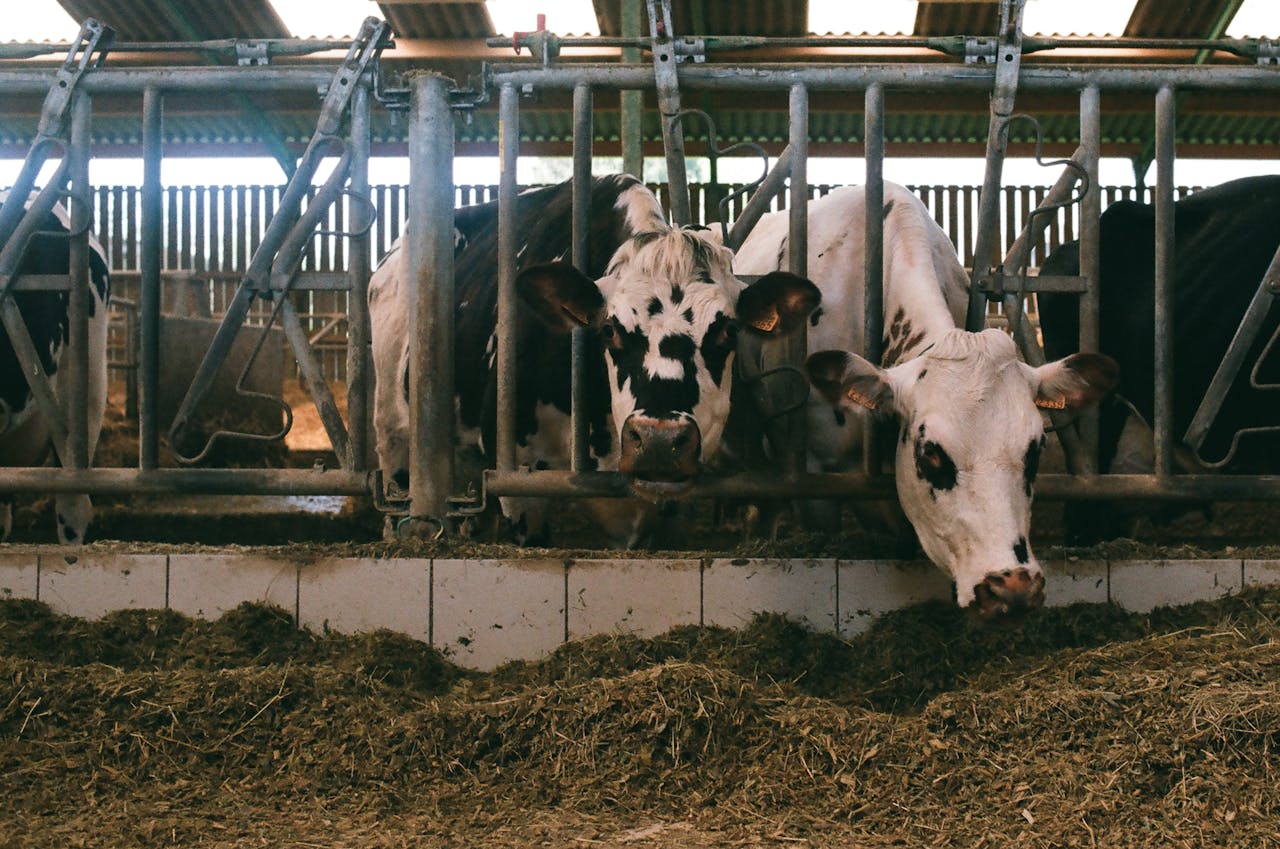
“Emissions from feed are the second largest contributor after enteric emissions – accounting for an average of 30% of total farm emissions based on our data.
“If we use true feed data – tonnages, constituent analysis and sourcing – better decisions can be made at both farm and retailer level to mitigate emissions.”
To tackle this issue, Map of Ag has been working with more than 100 feed companies to ensure that accurate feed data recorded. Algorithms have been developed to calculate emissions from individual feed tickets, based on actual ingredients and inclusion rates.
Some feeds can have 3 times the emissions of others
Variation between feeds
“The variation between feeds is striking,” says James Husband, Senior Livestock Consultant at Map of Ag.
“Some standard 18% protein compounds and blends can carry up to 3 times the embedded emissions of others. That can make a substantial difference when you’re looking to reduce your feed-related emissions.”
Using generic data has also led some food businesses to introduce blanket bans on ingredients such as soya, especially where provenance can’t be verified. While concerns around deforestation are valid, Husband cautions against generalisations.
“When responsibly sourced, soya can be a very cost-effective and efficient protein source that can even carry environmental advantages over other sources,” he says.
“Soya delivers more protein per hectare than many alternatives and, as a legume, helps fix nitrogen. That’s why accurate, feed-specific data is essential to correctly account for responsibly sourced materials.”
Individual farms, Scope 3 emissions
And as processors and retailers push toward net zero, farmers are coming under increasing scrutiny over Scope 3 emissions – those generated on farm but included in supply chain carbon totals.
“We can now calculate embedded emissions for individual farms thanks to a deeper knowledge of ration components and their emissions,” says Husband.
“This enables us to map feed-related emissions back to the farm with precision. It highlights real, practical opportunities for reduction and gives farmers control over what’s driving their numbers.”
Regulatory pressure
As of next year, the upcoming EU Deforestation Regulation (EUDR) will also place more pressure on the sector. In 2026, beef exported to the EU, including cull cows, must be proven free from links to deforestation.
“Farmers will need to know the origin of their feed ingredients,” says Husband. “This won’t be optional – especially for businesses exporting into Europe.”
A more targeted approach to emission reductions
In addition, using feed-specific emissions data also allows a more targeted approach to emission reductions.
“One potential win, if locally available, is the use of co-products in the diet,” says Husband. “Because most embedded emissions are already allocated to the original industry – like brewing – they typically carry a much lower carbon cost. For farmers in the right areas, they can make both economic and environmental sense.”
Feed manufacturers are also moving to improve transparency. Beth Austermuhle from ForFarmers says the company already calculates emissions data for its full product range.
“While this information isn’t yet listed on feed labels, it is available on request or via data partners such as Map of Ag,” she explains.
“It’s essential that we understand the role feed plays in a farm’s overall carbon footprint. Generic values only give an indication – that’s why we use accurate, product-specific figures.”