Indonesia’s move to channel all soybean meal imports through a single state-owned company is raising tough questions about efficiency versus government control. While aiming to stabilise prices, the new policy could disrupt the delicate balance of the country’s feed supply chains. The greatest risks fall to farmers, who will shoulder the costs of any missteps.
If feed is the lifeblood of livestock production, then soybean meal (SBM) is its bloodstream. Beginning in early 2026, Indonesia’s government plans to channel that bloodstream through a single artery: the state-owned enterprise (SOE) Berdikari. The policy, which shifts SBM imports from private players to one state gatekeeper, is officially framed as a move to stabilise prices and strengthen national food and feed sovereignty. On paper, it looks orderly. In practice, it could be disruptive.
Efficiency or a power play?
Under the new policy, SBM imports will no longer be handled by feed mills and private importers. Instead, Berdikari will become the sole importer, with a transition period lasting until March 2026. While the government emphasises control and coordination, industry players are asking a more basic question: is this about efficiency, or about power?
Stability versus industry reality
Officials argue that tighter import controls are necessary to secure supply and maintain stable feed prices. SBM is the second most strategic feed ingredient after corn and accounts for approximately 25% of standard poultry feed formulations. Any disruption in its supply or pricing has an immediate impact on production costs.
However, the feed industry does not operate on policy narratives. It operates on vessel schedules, global contracts, US dollar pricing, and thin margins. SBM is traded globally, with prices shaped by South American weather, geopolitics, and futures markets in Chicago. Large feed mills have long managed these risks through diversified sourcing, long-term contracts, spot purchases and hedging strategies. The one-gate policy effectively absorbs those mechanisms under a single instruction: imports must pass through a state-owned firm.
Can the state act like a global trader?
Importing SBM is not just about buying cargo. It requires precise timing, market insight, inventory management and a willingness to take commercial risks. A mis-timed purchase can mean higher prices. A delayed vessel can make feed mills idle. A stock miscalculation can halt production entirely.
This is where scepticism emerges. Indonesia has long struggled to manage domestic maize production, yet now seeks to centrally manage a globally traded commodity sourced from Brazil, Argentina and the United States.
The assumption seems to be that SBM will behave more predictably simply because it is imported by an SOE. Industry insiders doubt that logic. One feed industry source, quoted in national poultry media, summed it up bluntly: the problem is not the state’s involvement, but the absence of a backup if the single gate fails.
Farmers bear the real cost
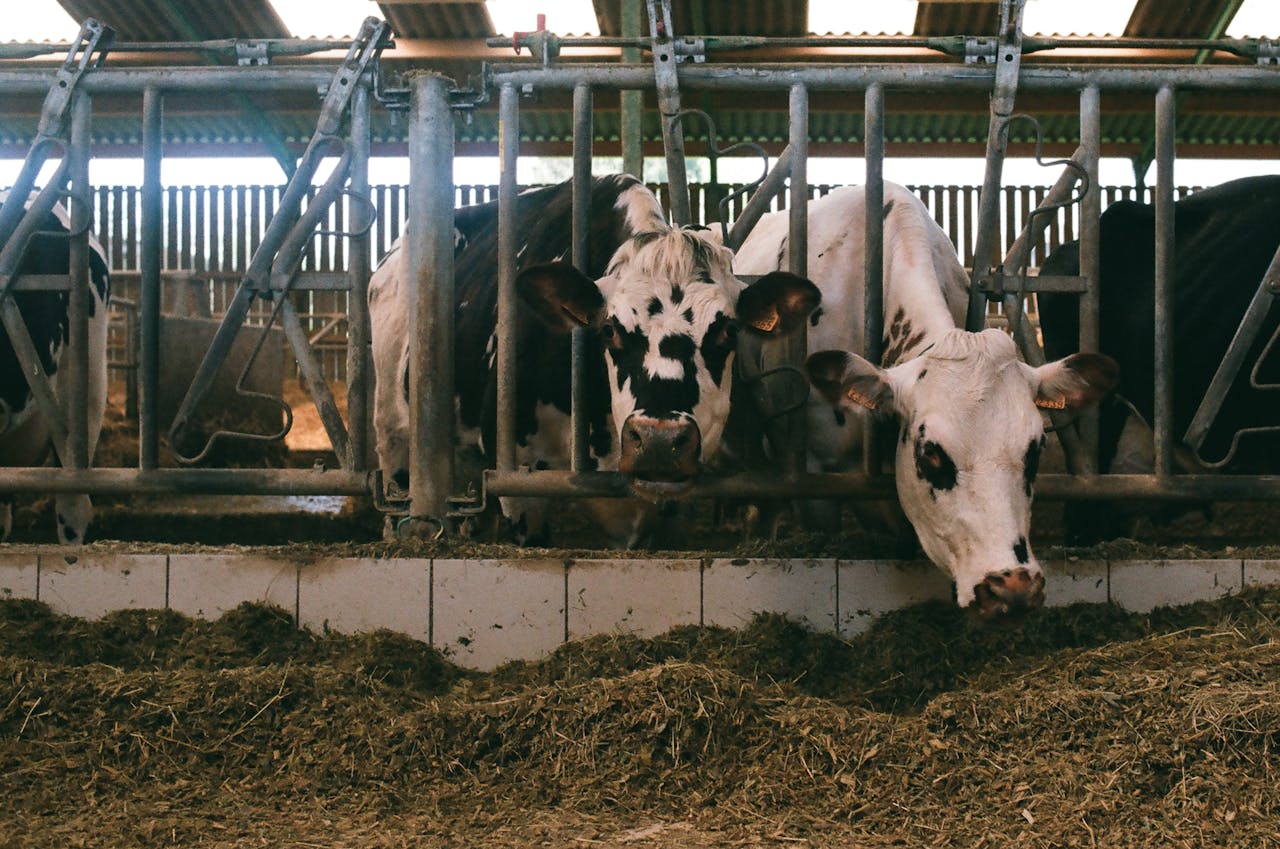
At the end of the supply chain, farmers remain the quietest yet most vulnerable stakeholders. Feed prices are highly sensitive to movements in SBM. A 5% increase in SBM prices can push feed costs up by 2–3%. For small-scale poultry farmers, that margin can represent the difference between profit and loss. Yet farmers are rarely present at policy tables. They only feel the consequences. If supply tightens, feed prices rise. When feed prices rise, live bird prices are often suppressed by the market. When losses follow, farmers are labelled inefficient.
In response, feed mills may resort to reformulation, reducing protein levels, increasing the use of substitutes, and hoping that animal performance does not decline sharply. Hope, however, does not always translate into good feed conversion ratios.
Private importers on the brink
Private importers are among those most directly affected. Overnight, they risk being reframed from supply-chain partners to suspected speculators. Public narratives often oversimplify feed price volatility as the result of importer greed. In reality, private importers have played a key role in keeping Indonesia’s SBM supply relatively functional. Removing them without a clear collaborative framework risks creating supply gaps. Some analysts have gone further, describing the policy as a form of state monopoly wrapped in the language of stabilisation.
A double-edged sword for SOE
For Berdikari and other state players, the policy is a high-stakes gamble. Success would bring praise as a food security champion. Failure would make the SOE a national scapegoat. Indonesia’s food policy history suggests that the latter is not unlikely.
The task is formidable: maintain stable prices, guarantee supply, and remain efficient — all roles that challenge even multinational commodity traders with decades of experience. Without transparent pricing, a clear buffer-stock mechanism and close coordination with feed mills, the policy risks creating new instability rather than preventing it.
A commodity without ideology
SBM does not recognise slogans about sovereignty. It responds to contracts, vessels and the US dollar. Managing it through centralised authority without sufficient technical readiness or collaboration is like trying to regulate the weather with a circular letter.
A one-gate SBM import policy is not inherently wrong. But making it absolute, without checks and balances, is a costly bet, one that ultimately puts farmers’ livelihoods on the line. If the state wants to be present, it should act as a fair referee, not a sole player expecting the market to comply. Because in poultry sheds across the country, policy satire quickly turns into real losses.