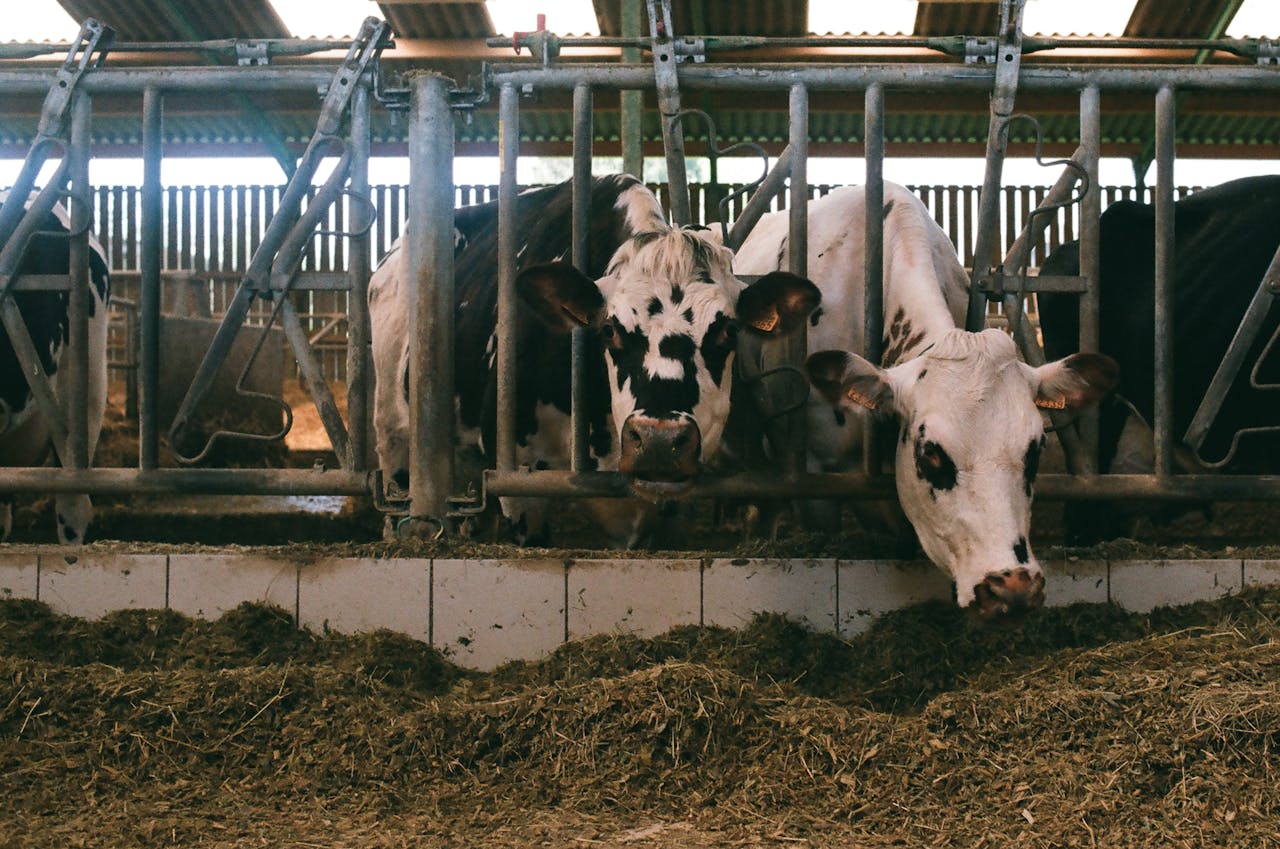
The metabolic problems in cattle herds that Danish dairy farmers experienced last autumn after feeding Bovaer seem to have been caused by a high sulphur content in the feed ration.
This is what the Danish research institute SEGES concludes based on data analysis of feed rations from farmers who filled out a questionnaire after experiencing health problems in their dairy cattle. The analysis is based on 200 large dairy farms that reported making no changes to their rations before starting with Bovaer.
Higher sulphur content in feed ration
According to SEGES, increased sulphur content in the ration is caused by the use of rapeseed products as a protein source. The analysis showed that the sulphur content in the 200 examined rations was higher than in control farms: specifically, 2.62 grams/kg dry matter compared to 2.48 grams/kg dry matter.
According to Jan Dijkstra, associate professor of animal nutrition at Wageningen UR, a difference of 0.14 grams sounds quite small: “But it also depends on the uniformity of the ration. If a high-producing cow receives a lot of concentrate and thus rapeseed products, then it makes sense that she would experience problems sooner than a low-producing cow.”
However, Dijkstra notes a crucial missing element in the analysis: “They didn’t look at the actual sulphur content in the ration but instead used standard values for feed components via the Norfor system. But given the numerical increase, I do not completely rule out that there could still be an effect from Bovaer.”
Rapeseed sulphur-rich, formation of hydrogen sulphide
If rapeseed is the main protein source, SEGES says the product can provide 50-60% of the sulphur content in the feed. In rations with a high proportion of maize, that share can increase to 70%.
Bovaer inhibits the production of methane, while at the same time more hydrogen becomes available in the rumen. In combination with the higher sulphur content, this can lead to the formation of hydrogen sulphide (H₂S). Hydrogen sulphide is known, according to Dijkstra, to lead to a reduction in rumination activity. Therefore, a maximum of 3 to 4 grams of sulphur per kg of dry matter is applied as an upper limit. What Dijkstra misses in the SEGES analysis is the role of water quality. Water with a higher sulphur content, combined with a larger proportion of rapeseed products in the ration, can lead to a compounding effect in sulphur content.